
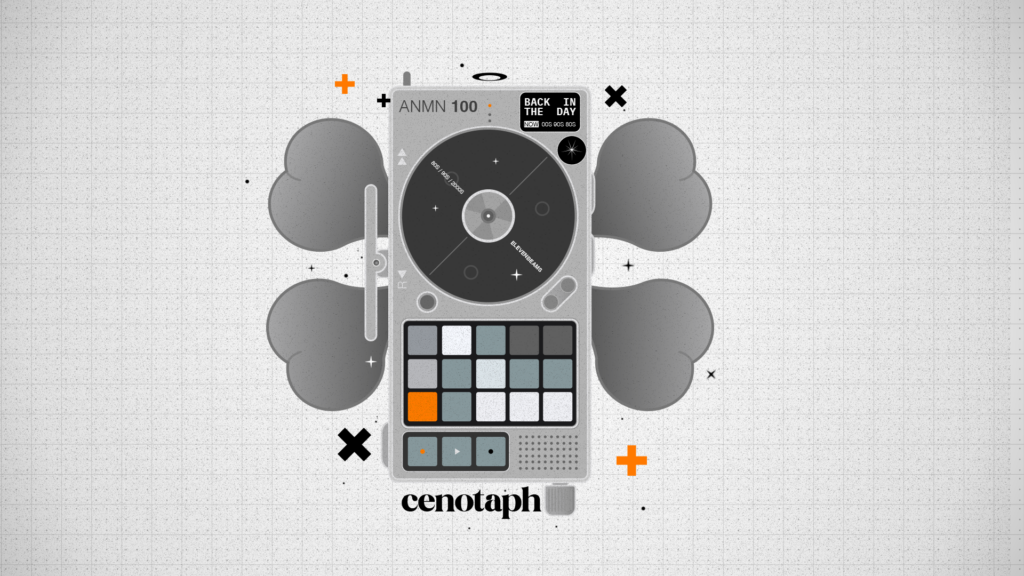
When the future feels empty, generations start mining the past for meaning. An attempt at revival that becomes archeology.
But if the future only gets darker, does the past become brighter?
Anemoia
Coined by John Koenig, the term “anemoia” appears first in The Dictionary of Obscure Sorrows. It defines a “false-nostalgia” or a romanticized longing for a past you’ve never lived through. It is a sorrow for a perceived simplicity, and aesthetics associated with an era long-gone (1920, 1970).
Youngsters
Modern occulture is mostly built on glorifying the Victorian era, the deeds of occultists long gone, and grimoires that were never completed. It’s the egregore’s natural response when an adequate continuation of the movement or craft is absent.
The collective fails to offer a plausible future, so the offer is rejected. Whether that’s rap or esotericism. Most contemporary spiritual gurus are no different than mumble rappers.
Today’s younger generations (alpha and beyond) tend to share an obsession with cultures from times they weren’t born in. Examining their “new” aesthetics and sounds, we can draw several conclusions.
Teenage Engineering
There are many great tape recorders. In most cases, even an iPhone is enough. Yet, tech aficionados really enjoy the Swedish Teenage Engineering, often regarding their TP-7 as the “Ferrari of recorders.” Why?
- Is it the minimalistic chassis alluding to the aluminum OG Macs and the Steve Jobs era?
- Is it the physical buttons and motorized rewindable reel evoking the feel of a turntable torque… and perhaps baby scratches that are possible on it…similar to JVC (early 2000s) GhettoBlaster.
- Or is it its neat package sizing, not iPhone, iPad, smartwatch, aura ring, but a cassette tape?
Though digital, Teenage Engineering products intentionally bring an analog (physical) feel informed by actual MPCs, SP1200s, and turntables. People buy such gear to feel “real” in a world that feels fake.
When that gear is a luxury or new tech, society justifies the desire. When it isn’t, it’s labeled as “weird.” Who knows. A different society might have encouraged people to buy turntables and learn to scratch, or dig into the art of sampling. For now, claiming a “culture connoisseur” label is enough.
The Hyperreal
Another expression of the same thing is “sneaker culture,” at which LA graffiti legends like Mike Giant laugh. Kids are all about classic Nikes or New Balance, but they seldom engage in the activities that made the brands popular.
Why a skateboard deck on the wall, if you’ve never skated yourself? Why a Kaws figure and/or graffiti book on display, if you’ve never tasted the thrill and discomfort of cops taking your ID until you clean your tags with a metal brush and alcohol. Why glorifying old tech through framed disassembled devices, when your whole lifestyle screams:
- Buy the latest and greatest you can afford.
- Optimize performance at any cost.
It’s what Jean Baudrillard termed “hyperreal.” According to him, the simulacrum no longer copies the real. It becomes a truth in and of itself, a simulation of a past that either never existed or no longer has an original to return to.
Whether a skate deck or a Kaws figure, it’s Baudrillard’s “third stage” of representation: a pretense of reality where the model is missing. The “Golden Era” becomes a ghost we can’t locate, yet we wear its shroud to feel a sense of anchor.
Slow Living
Isn’t this similar to collecting Esoteric books, without doing rituals? Whatever the case, it’s the softcore version. More hardcore is the so-called Slow Life movement. Advocated as a tactic against depression and anxiety, part of slow living, is embracing old tech:
- VHS,
- Walkmans,
- Cassette tapes,
- Record players,
- Non-Bluetooth headphones,
- Handwriting and reading physical books.
Lo-Fi fans and producers like to title playlists and beat tapes “Nostalgia.” But is it nostalgia, or a cultural anemia? A simulacrum of experience. A radical shift in an attempt to feel alive and remain sane.
Once upon a time, the music producer Naut Humon (Asphodel Records) identified Drum and Bass and its subtypes as the “last new genre.” Was he onto something?
- Lo-Fi (house and beats) may be seen as telling stories about the golden era without ever being there.
- Wave Trap and Phonk paint imagery of distant districts of a metropolis, slabs/donks, but are usually made by people who live on the internet, inspired by anime classics.
Paradoxically, the innovation comes from the unconscious urge to tell a story about those who came before you.
- Lo-Fi and labels like Chillhop took sampling to new heights. The producers work exclusively with live instrumentation and custom sounds. The Golden Era sampled pre-existing music.
- Wave and Phonk masters like Imminent Cybercorporation and LXST CENTURY break the monotony, taking the lineage started by DJ Screw, Shawty Redd, Lex Luger, and 808 Mafia, something “industry folks” would never dare to. Maybe, inspired by the SoundClick era.
Backpackers
But while Baudrillard sees this as a negative hollow out, Gilles Deleuze offers a different exit. For Deleuze, the simulacrum is an opportunity to challenge and overturn the “privileged” position of the original. He sees it as a system where “different relates to different.” By stripping away the “prior identity” of what things should be and sound like, contemporary creators aren’t just failing to be the past; they take away the past’s authority, and create something new.
The skill is no longer found in the kickflip or the physical tag, but in the curation of the camera, the typography of the post, and the manipulation of the signal.
LA icon and People Under the Stairs Producer, Thes One, asked young people: How can you obsess with the Golden Era, since you weren’t even around? He challenges youngsters by saying that if they really know what PUTS should sound like, they need to come and produce the group instead of him.
Movies like Netflix DOPE make young backpackers appear laughable. But is this accurate? Or it’s rather modern culture, the real joke. Is that the newer generations lack identity, or is it that the “new” era failed to offer alternatives and subcultures, to the point that everything that came before is worn as a badge of honor, rebellion, and belonging?
Belonging
Belonging to what? Albeit partial and quiet, isn’t this a collective opting out of one’s era?
- Hip Hop,
- Skateboarding,
- BMX,
- Gangs,
- Rave,
- Etc.
Back in time, these were authentic cultures, with unique peculiarities. And while they often had overlaps and mutual influences, they kept pretty distinct, and were alternative to each other. Cross-cultural fusions did exist, but as complements, additions, and branches, not replacements.
- CBS graffiti crew,
- Neo-Metal with rapping.
Now, everybody claims they do this or that for “the culture,” which seems to be an all-encompassing, omnipotent, amorphous mass dictated by algorithms. So, is it for the “culture” or rather for the algorithm?
Marketing-wise, “the culture” of now is all-inclusive. It offers all kinds of “alternatives” within itself. Had that been the case, youngsters wouldn’t be looking to create a generational replay.
When the future stops breathing, the past is worn like a mask. Cultures did not disappear; they were replaced by display.
— POTB